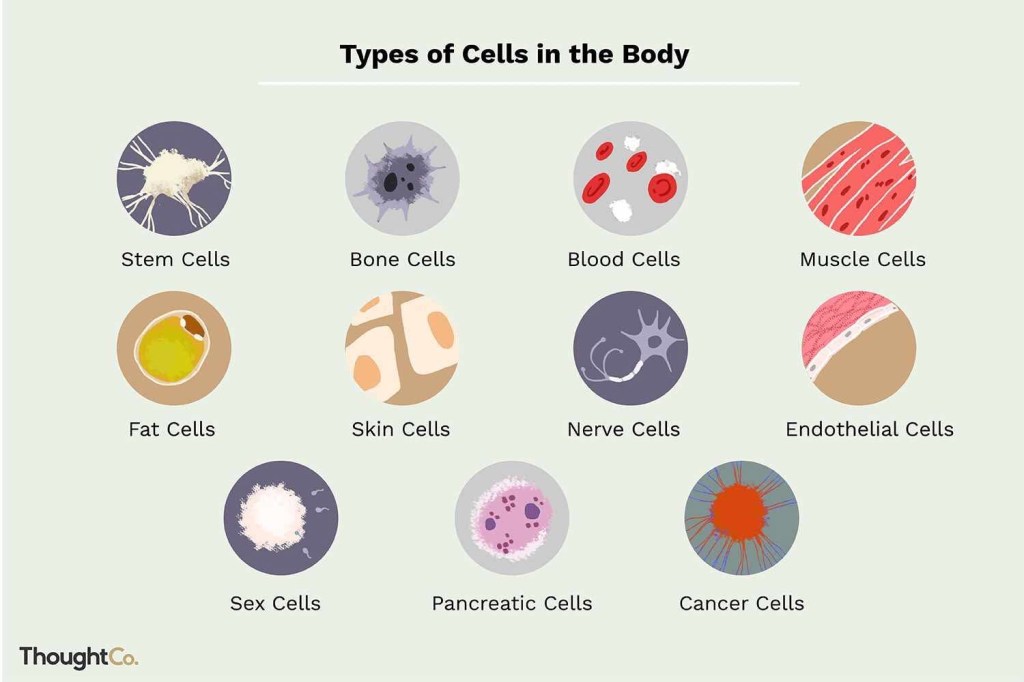
This image shows different types of cells in the human body. Each type of cell has a special role that helps the body work properly. Here’s a simple explanation of each:
Stem Cells – These are the “master cells” of the body. They can develop into many different types of cells (like muscle, nerve, or blood cells) and help with growth and repair.
Bone Cells – These form and maintain bones. They help in bone growth, repair, and keeping bones strong.
Blood Cells – These include red blood cells (carry oxygen), white blood cells (fight infections), and platelets (help blood clot).
Muscle Cells – These make up muscles. They contract and relax, allowing movement of the body and organs.
Fat Cells (Adipocytes) – These store energy in the form of fat. They also provide cushioning and insulation for the body.
Skin Cells – These form the outer covering of the body, protecting us from injury, germs, and dehydration.
Nerve Cells (Neurons) – These carry messages (electrical signals) between the brain, spinal cord, and the rest of the body.
Endothelial Cells – These line the inside of blood vessels and help control the flow of substances between the blood and tissues.
Sex Cells (Gametes) – Sperm cells (male) and egg cells (female). They are needed for reproduction.
Pancreatic Cells – Found in the pancreas, they produce hormones like insulin and enzymes to help digest food.
Cancer Cells – These are abnormal cells that grow and divide uncontrollably, disrupting normal body functions.
👉 In short: The body is made up of specialized cells, each with a unique function, and all of them work together to keep us alive and healthy.
Would you like me to also explain how these cells are connected or work together as a system?
 ScienceAndDiscovery